Featured Entries

Know a good UD website or resource?
The Accessible Virtual Community
Worship and Religion
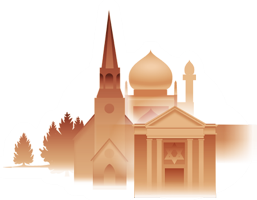
Putting disability on the religious agenda includes some unique considerations. How does religion view disability and how does this impact on the institutions that provide a place for worship? Are religious institutions subject to the same laws for accessibility as other institutions? What can be done to welcome all members of the community to a house of worship? In addition to the key resourcees on this page, to search for more related information, you can go to our Search Page.
7 items

Accessibility in Worship Architecture
This article by Joan Huyser-Honig discusses what aspects of architecture make a church a welcoming and accessible place. Huyser-Honig discusses the challenges and benefits of changing the church to be more accessible.
Calvin Institute of Christian Worship
ADA Requirements: Service Animals
This website has updated ADA guidelines, regulations, and rights for people with service animals.
Applying the Seven Principles of Universal Design to the Church
This article by Jeff Mcnair explains what universal design is and how it can be applied to the church. Mcnair elaborates on all seven principles and states how each can be implemented.
Disabled Christianity
Equivalent Experience Keys to truly accessible worship spaces
This article by Robery Habiger discusses the concerns surrounding adapting a church to be more accessible. Habiger explores how building accessibility and sacramental accessibility are two separate issues, although both can be addressed by those designing the church.
Faith & Form
Essential Components to Universal Design throughout a Parish
"The structure, direction, and speed with which this ministry evolves within any parish will vary according to a number of factors. The National Catholic Partnership on Disability has compiled components which are essential to an effective ministry with people with disabilities, regardless of the the ministry is conducted within the parish."
National Catholic Partnership on Disability
Hows and Whys of Architectural Accessibility
This website explains the experience of an Episcopal Church in Minnesota in making their congregation accessible. Problems faced by many churches are discussed along with suggestions for improving access. Links to various resources are available such as more than 50 ways to make your parish accessible, distinction between disability and handicap, and service dog ministry.
The Episcopal Disability Network
Tips for Communicating with People who are Deaf and Hard-of-Hearing
A tip sheet for communicating with individuals who are deaf and hard-of-hearing.